Reference
Postmarks and cancels
A postmark is the strongest evidence a postcard can carry: it records a real date, on a real day, at a named post office. When the dial is crisp you are done — no decoder needed. This page is about the other case, when the date is smudged, clipped or half-struck, and the type of marking has to do the work instead.
Read the dial first
The circular dial carries the office and the date. Even a partial strike often yields a year, or the last two digits of one. A postmark dates the mailing, not the printing: a card can be years old by the time someone writes on it, so a postmark is a latest-possible date for the card’s production, not the production date itself.
When the date is gone, the marking type still helps
Machine cancels with advertising or public-service slogans belong to particular campaigns, so the wording itself carries a rough period. Flag cancels, duplex handstamps and railway post office marks each belong to broad eras of postal practice. None of these is as precise as a legible dial, and we would rather give you a decade you can trust than a year we invented.
Ocean City, N. J. — a dated dial
circular date stamp (dial / CDS) · the dial gives the date outright: September 1, 1908
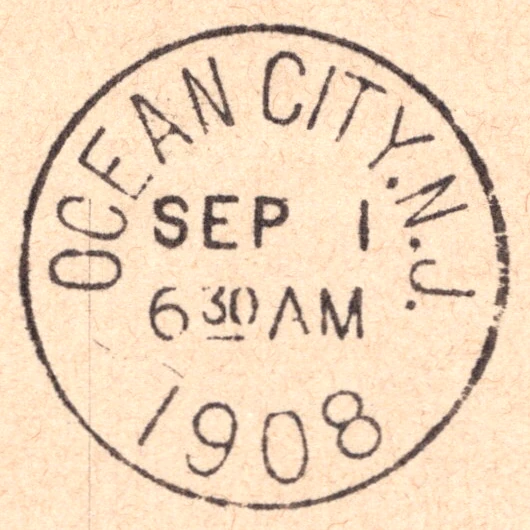
This is the whole point of a postmark: the circular dial names the post office (Ocean City, N. J.), the date (Sep 1, 1908) and even the time (6:30 AM). No decoder, no inference — the mailing is fixed to a single morning.
It is the same card as the 1¢ Franklin on our stamps page. The stamp only tells you the card was mailed no earlier than 1903; this dial tells you exactly when. Together they show the method working: the stamp sets a floor, the postmark sets the day.
The dial also quietly settles the stamp’s identity. A 1¢ green Franklin comes in two look-alike series, and the later Washington–Franklin printing did not exist yet in September 1908 — so the readable date on this dial is what proves the stamp is the earlier Series of 1902.
What it does and doesn’t tell you. A postmark dates the mailing, not the printing. A card can sit unused for years before it is sent, so a dial is a latest-possible date for the card’s production, and an exact date for its journey. Here the card was almost certainly bought and mailed the same season, but the dial only guarantees the mailing.
Sources: US postcard rate was one cent from 1898 until November 2, 1917, so a 1¢ Franklin correctly paid the 1908 postcard rate: Smithsonian National Postal Museum, U.S. Domestic Postcard Rates; 1¢ Franklin of the Series of 1902 issued to pay the one-cent postal-card rate; Washington–Franklin series not begun until November 1908: Smithsonian National Postal Museum
HIRE THE HANDICAPPED — IT’S GOOD BUSINESS
slogan cancel · campaign from 1945–46; slogan cancels documented from at least 1949
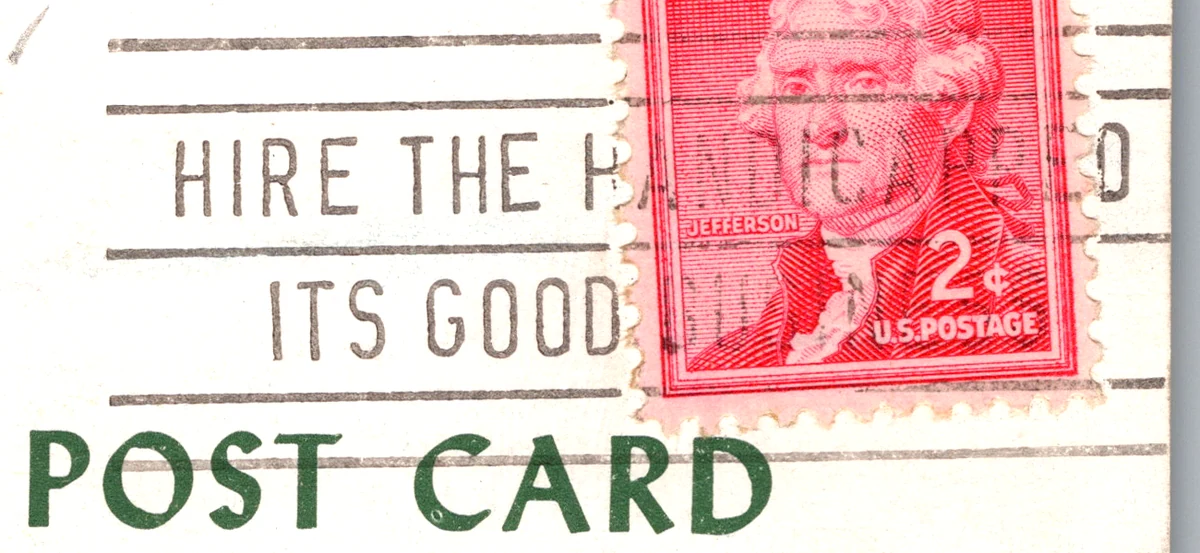
The wording comes from the federal National Employ the Physically Handicapped Week campaign, established by act of Congress and presidential proclamation; a campaign poster with this slogan was issued for the week of 6–October 12, 1946.
Government programme guides using the same slogan were published for the campaign weeks of 1948 and 1953, and related material continued into the 1960s.
Machine slogan cancels with this wording are documented on mail from at least January 1949 (Boston) and 1952 (Rochester, New York).
What it does and doesn’t tell you. We have not found a documented first and last day for this slogan die, so treat it as a broad mid-century indicator — roughly the late 1940s onward — rather than a narrow date range. The dial beside the slogan carries the actual date; read that first.
Sources: National Employ the Physically Handicapped Week campaign materials, 1946, 1948 and 1953: US Government Monthly Catalog records; Documented slogan-cancel uses: Smithsonian Institution transcription of a 1949 Boston postcard; philatelic listing of a 1952 Rochester, N.Y. cover
GIVE — ENOUGH THROUGH YOUR COMMUNITY CHEST
machine slogan cancel · Community Chest era — the name was in wide use through the 1940s and faded in the early 1950s
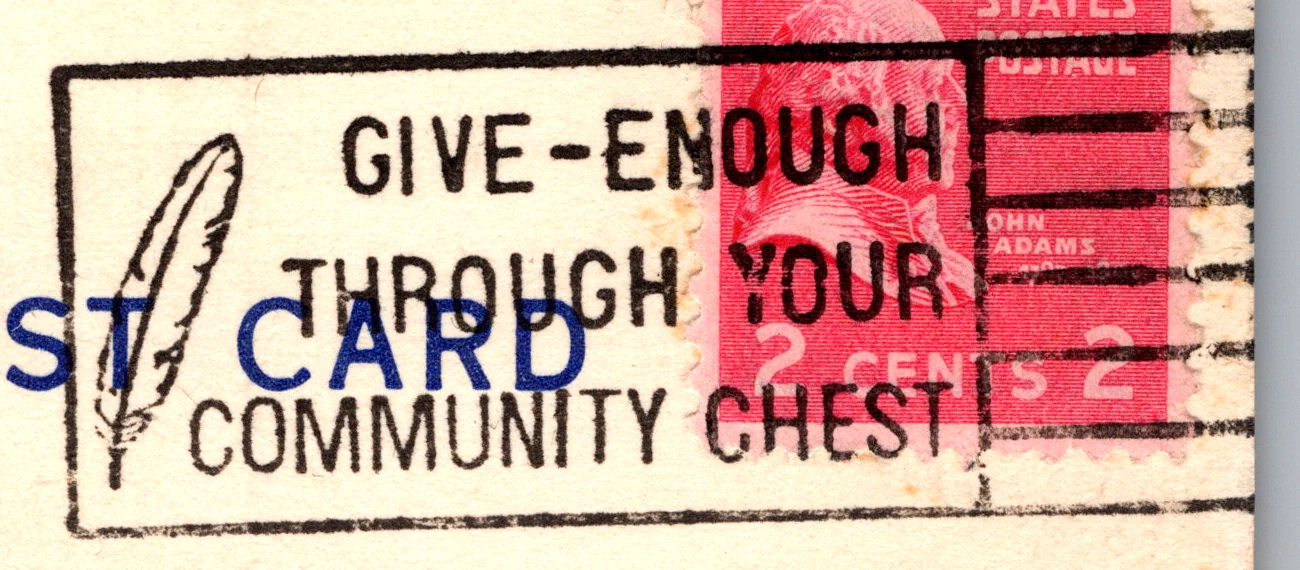
A machine slogan cancel promoting the Community Chest, the pooled local charity federation that was the direct ancestor of today’s United Way. The “give through your Community Chest” wording, with its quill-feather emblem, goes back to a 1922 campaign logo.
The “Community Chest” name was widely used until the early 1950s, after which local federations increasingly renamed to United Fund; the national body adopted “United Way” in 1963. A Community Chest cancel therefore points to roughly the 1920s through the early 1950s — and this one is postmarked November 1951, right at the tail of that era.
It shares a card with the 2¢ John Adams on the stamps page: the same Atlanta postcard, printed by Colourpicture. One card, three clues.
What it does and doesn’t tell you. We have not found a documented first and last day for this specific slogan die, so treat it as a late-1940s-to-early-1950s civic-campaign marking rather than a precise range. As always, the dial beside the slogan carries the actual date — here, November 16, 1951.
Sources: Community Chest as the ancestor of United Way; “Community Chest” name used until the early 1950s; “United Way” adopted 1963: Wikipedia (Community Chest); United Way local-affiliate histories; “Give through your Community Chest” feather-logo slogan dates to 1922: United Way logo/brand histories
STRIKE BACK AT CANCER — GIVE
machine slogan cancel · an American Cancer Society fundraising slogan; the society took that name in 1945
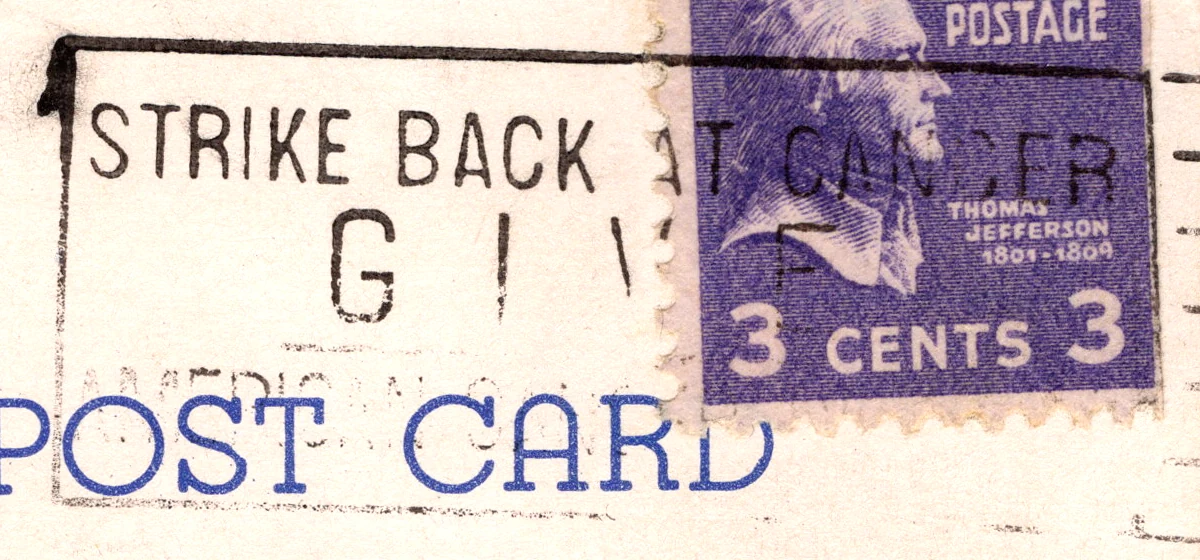
A slogan cancel for the American Cancer Society’s fundraising drive — the charitable sibling of the Community Chest cancel elsewhere on this page, and another case of the post office lending its cancelling machines to a civic campaign.
The society was called the American Society for the Control of Cancer until 1945, when it was reorganised and renamed the American Cancer Society; a cancel naming the American Cancer Society therefore dates to 1945 or later. Its annual crusade ran each spring, so these slogans cluster around the fundraising season.
What it does and doesn’t tell you. We have not pinned a first and last day for this particular slogan die, so treat it as a post-1945 American Cancer Society campaign marking rather than a precise year. The dated dial struck alongside the slogan carries the actual mailing date.
Sources: American Society for the Control of Cancer renamed the American Cancer Society in 1945: American Cancer Society history; Wikipedia (American Cancer Society)
Station J — a branch-office dial, 1910
circular date stamp (station cancel) · the dial gives the date: 1910
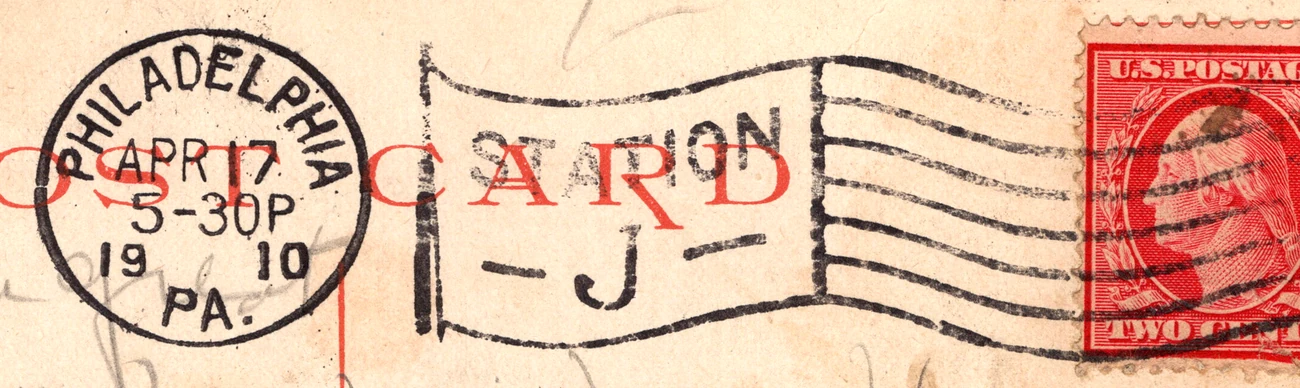
A dated dial from a lettered branch station. Big-city post offices ran numbered and lettered sub-stations (Station A, Station J, and so on), and the station name in the dial tells you the mail passed through a large urban post office, not a small town.
As with any circular date stamp, the ring names the office and the date outright — here, 1910 — so it dates the mailing directly, no decoding required.
What it does and doesn’t tell you. A station letter identifies the branch, not the city, unless the city name also appears in the dial. It dates the mailing, not the printing of the card.
Sources: US big-city post offices operated lettered and numbered branch stations that appear in the postmark dial: general postal-history reference
Pomona, Calif. — the year in the corner
circular date stamp (dial / CDS) · the dial gives the date: 6 September 1924
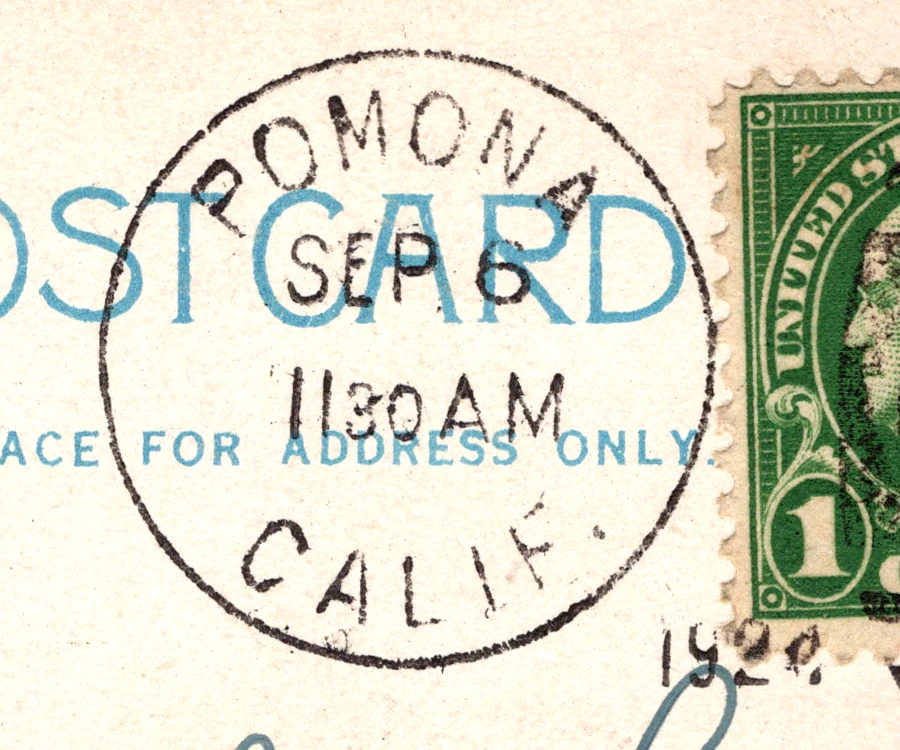
A dated dial from Pomona, California, struck at 11:30 AM on 6 September 1924. The twist worth knowing: the year is not inside the circle with the month and day — it sits in the lower-right corner of the marking. A reminder to read the whole postmark, not just the ring.
It shares a card with the Samarkand white-border view on the white-border era page; a handwritten “1924” on the same card confirms the reading.
What it does and doesn’t tell you. Dial layouts vary by office and machine; when the year is missing from the ring, check the corners and the slogan bars before assuming it is illegible. A postmark dates the mailing, not the printing.
Sources: Reading confirmed against a handwritten 1924 date on the same card, from the Postcard Origins collection
U.S. Treasury bond drive — a flag slogan cancel
machine slogan cancel · a Treasury savings-bond slogan cancel; this example postmarked 1953
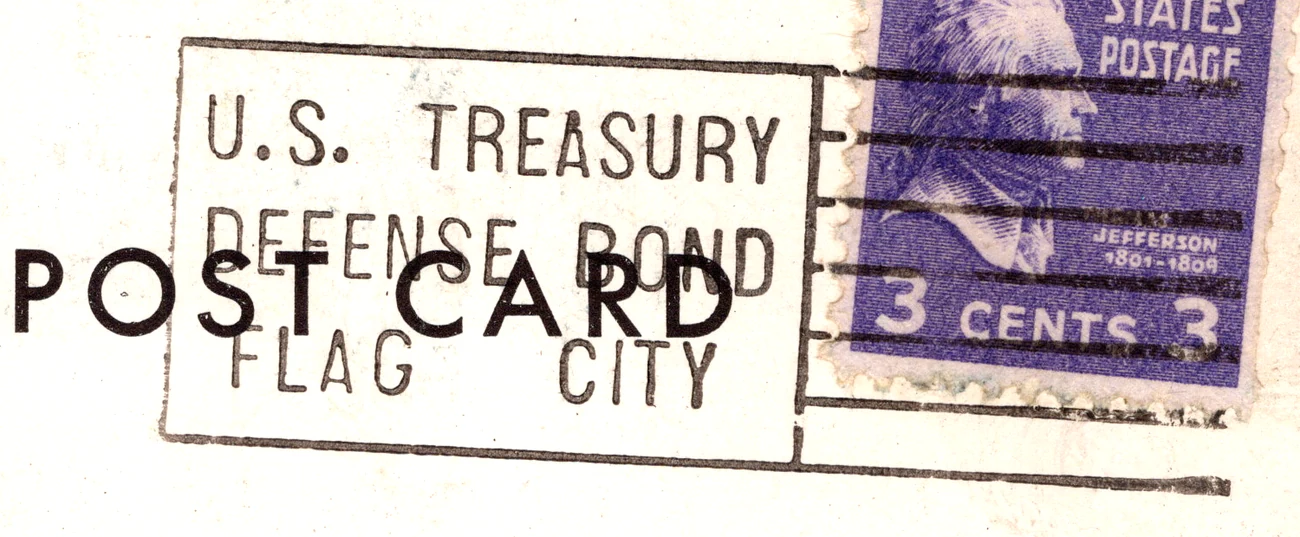
A patriotic machine slogan cancel promoting U.S. Treasury savings (“defense”) bonds, carrying a waving-flag device beside the dial. The Treasury lent the post office’s cancelling machines to its bond drives for decades, so these turn up across the 1940s and 1950s.
This example was struck at Long Beach, California, in 1953 — the Korean-War years, when the bond program was again promoted as national defense. As always, the dated dial beside the slogan carries the exact day.
What it does and doesn’t tell you. We have not pinned a first and last day for this particular slogan die, so read it as an early-1950s Treasury bond-drive marking rather than a precise range; the dial supplies the date.
Sources: U.S. Savings Bonds were promoted as “defense bonds” during national-defense periods (WWII and again in the Korean-War era): U.S. Treasury / Bureau of the Fiscal Service history
ADDRESS YOUR MAIL TO STREET AND NUMBER
machine slogan cancel · a postal public-service slogan; this example postmarked July 1945
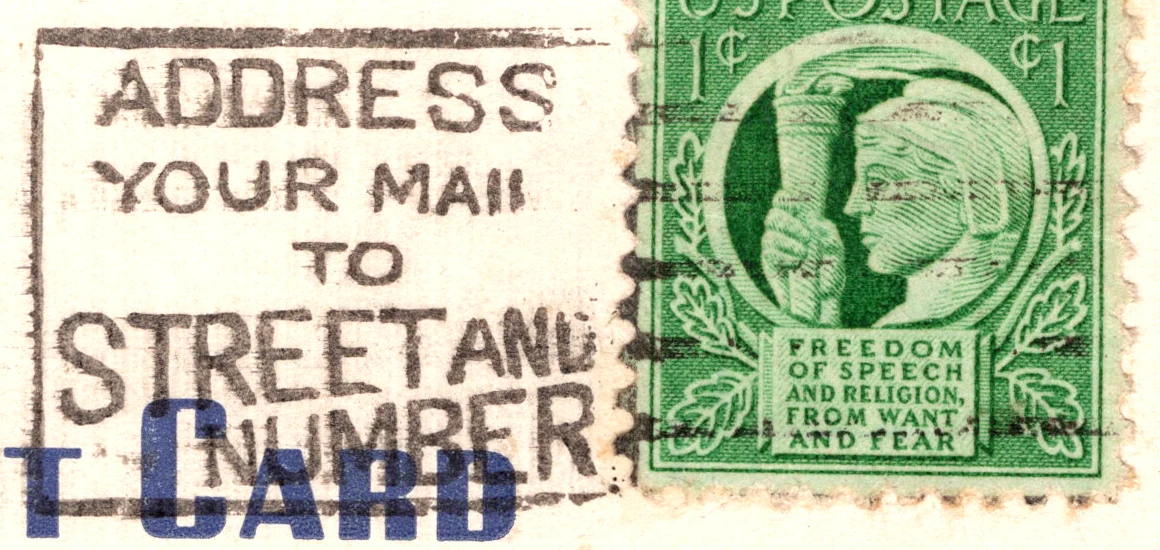
One of the post office’s own public-education slogans, urging senders to write a full street address. The department ran instructional cancels like this for decades, so the slogan is common; the dated dial beside it supplies the date.
What it does and doesn’t tell you. Read the dial for the date; the slogan itself spans many years.
Sources: US Post Office Department public-service slogan cancels: general postal-history reference
ALWAYS USE ZIP CODE
machine slogan cancel · promotes the ZIP code, introduced July 1, 1963; this example postmarked June 1969
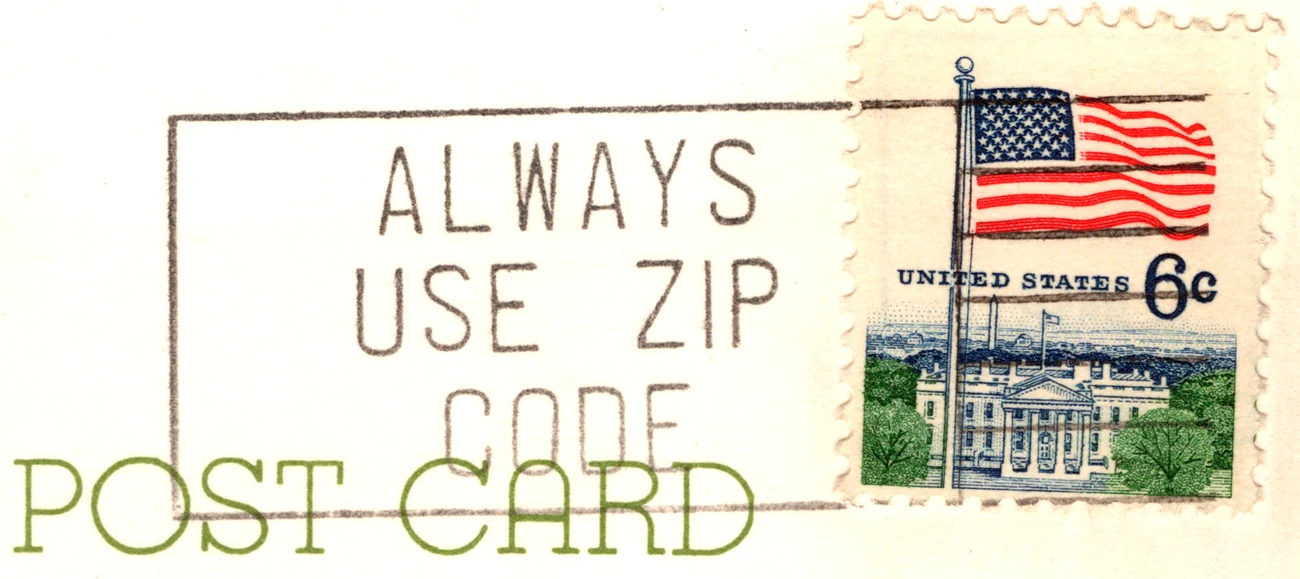
A promotional slogan for the ZIP code — which the post office introduced on July 1, 1963. That gives a firm floor: no “ZIP CODE” slogan cancel can predate mid-1963, which makes it a genuinely useful dating clue when the dial is weak.
What it does and doesn’t tell you. The slogan dates a card no earlier than 1963; the dial gives the actual day.
Sources: ZIP codes introduced July 1, 1963: Smithsonian National Postal Museum; USPS history
BUY U.S. SAVINGS BONDS — ASK YOUR POSTMASTER
machine slogan cancel · a Treasury savings-bond slogan; this example postmarked October 1939
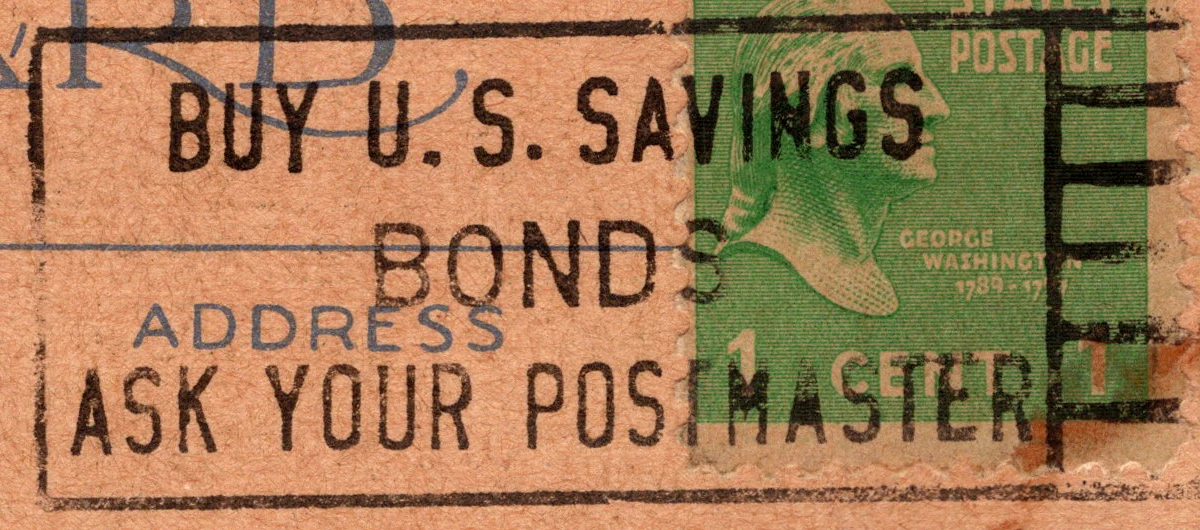
A Treasury bond-drive slogan from 1939 — before the wartime renaming to “Defense Bonds” (1941) and “War Bonds.” Post offices sold the bonds over the counter, hence “ask your postmaster.” The sibling of the 1953 defense-bond cancel elsewhere on this page.
What it does and doesn’t tell you. A pre-war savings-bond wording; the dated dial carries the day.
Sources: U.S. savings bonds sold through post offices; renamed “defense bonds” in 1941: U.S. Treasury / Bureau of the Fiscal Service history
SMOKEY BEAR — ONLY YOU CAN PREVENT FOREST FIRES
machine slogan cancel · the Forest Service fire-prevention campaign; this example postmarked August 1971
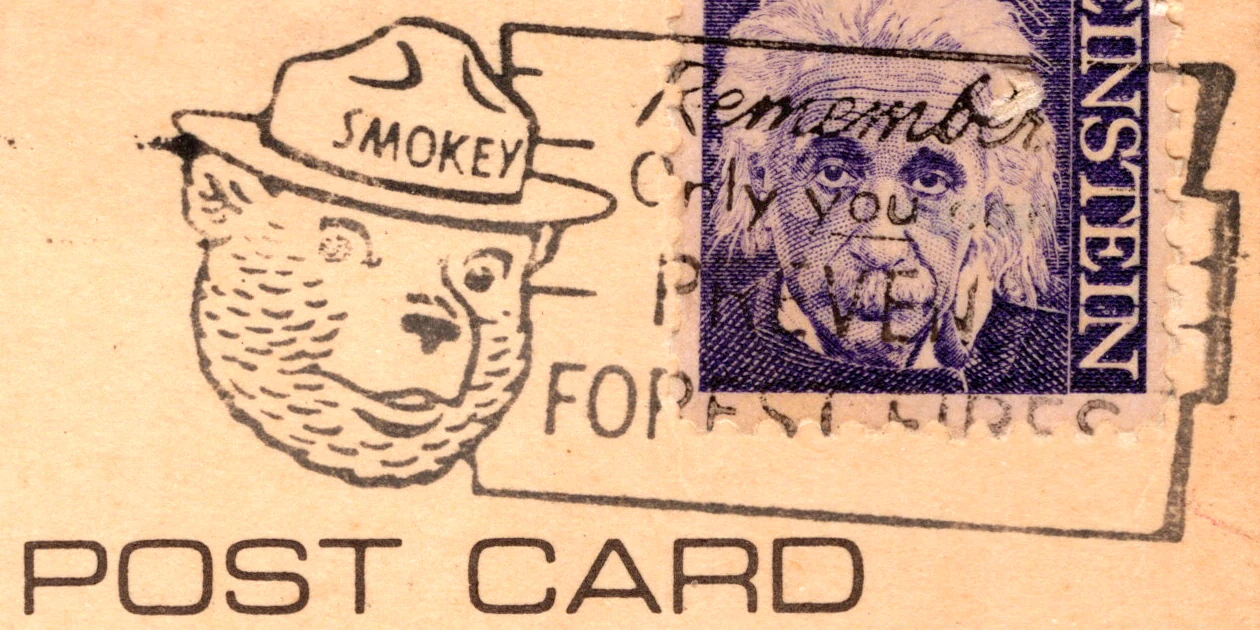
The U.S. Forest Service and Ad Council fire-prevention campaign, which Smokey has fronted since 1944 (officially “Smokey Bear” — the “the” comes from the 1952 song). The wording is a small dating clue: “prevent forest fires” predates the campaign’s 2001 switch to “wildfires.”
What it does and doesn’t tell you. The slogan spans decades; the dated dial gives the day.
Sources: Smokey Bear fire-prevention campaign, U.S. Forest Service / Ad Council, from 1944; slogan changed to “wildfires” in 2001: Ad Council history
SUPPORT YOUR MENTAL HEALTH ASSOCIATION
machine slogan cancel · a charitable-drive slogan; this example postmarked July 1978
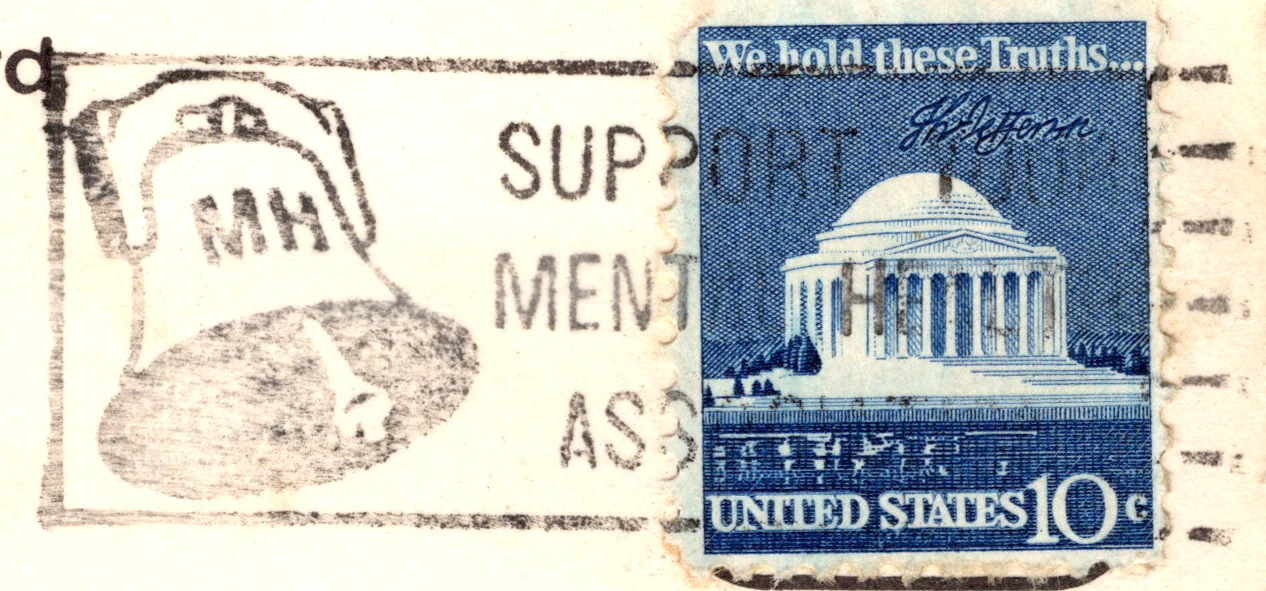
A civic-campaign slogan cancel for the Mental Health Association — the same lending of the post office’s cancelling machines to a charitable drive seen with the Community Chest and cancer-society cancels above.
What it does and doesn’t tell you. A campaign marking rather than a precise date; the dial carries the day.
Sources: Post-office slogan cancels for civic and charitable campaigns: general postal-history reference
DEFEAT MUSCULAR DYSTROPHY — SUPPORT MDA
machine slogan cancel · a charitable-drive slogan; this example postmarked June 1978
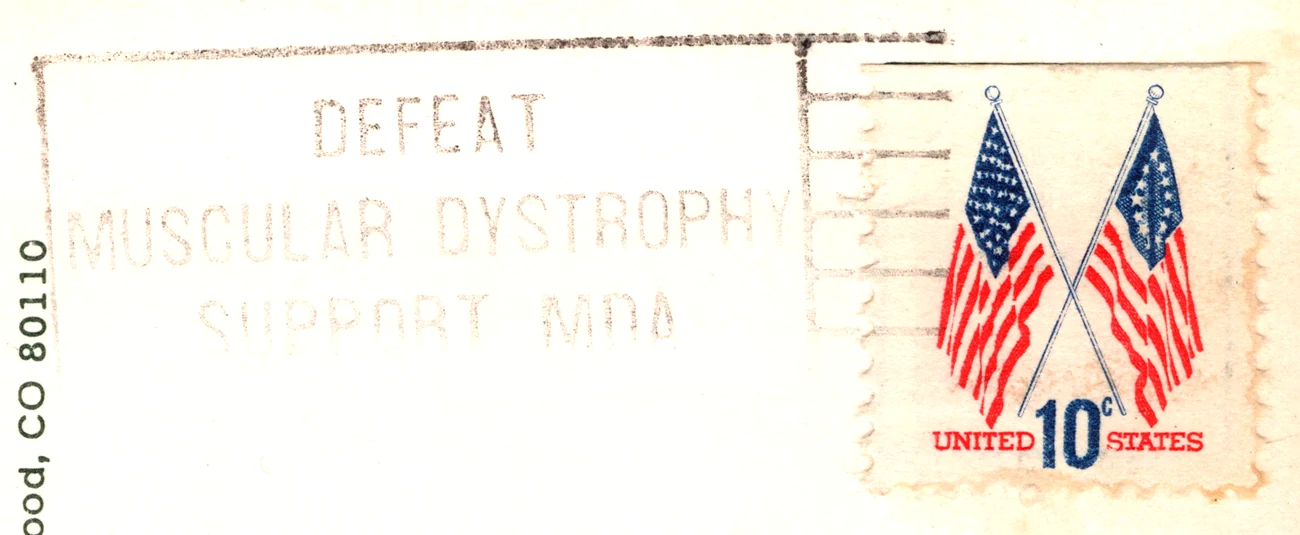
A slogan cancel for the Muscular Dystrophy Association’s fundraising drive — another civic campaign carried on the post office’s machines, of the kind that clustered around each charity’s appeal season.
What it does and doesn’t tell you. A campaign marking rather than a precise date; the dial carries the day.
Sources: Post-office slogan cancels for charitable campaigns: general postal-history reference
A flag cancel — stars and stripes beside the dial
flag cancel · a decorative flag device beside a dated dial; this example postmarked 1914
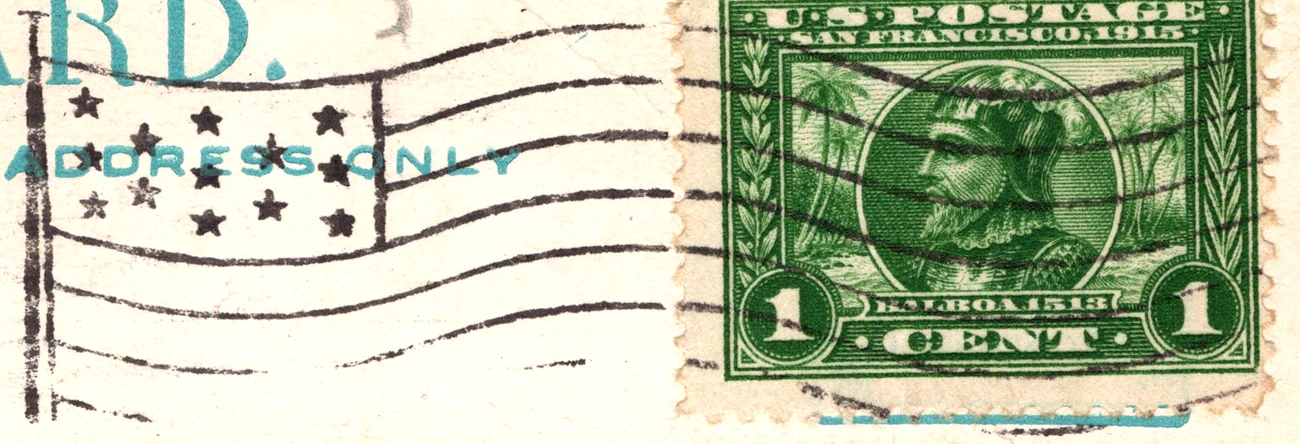
A flag cancel: the killer bars are drawn as a waving flag, a decorative style the post office and its machine-makers used in the 1900s–1910s. The stars are stylized (a handful, drawn for effect, not a literal state count), so don’t read a date from them — read it from the dated dial the flag is attached to.
What it does and doesn’t tell you. The flag is decoration; its star count is not a date. The dial dates the mailing.
Sources: Flag-machine cancels of the 1900s–1910s: general postal-history reference
Pair a postmark with the stamp above it and the rate it paid: together they usually bracket a card tightly, even when no single clue is decisive.